Inventing ELIZA
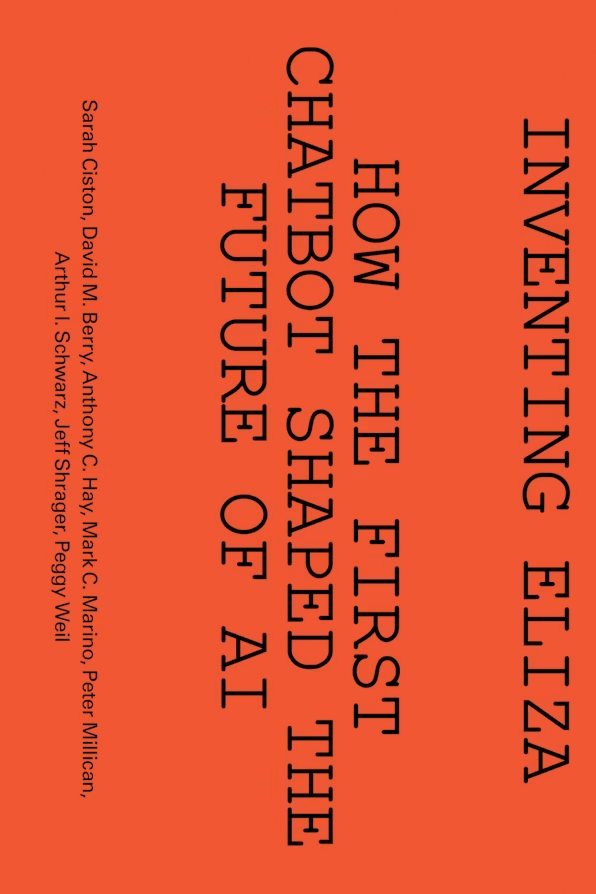
How the First Chatbot Shaped the Future of AI. A study by Sarah Ciston, David M. Berry, Anthony C. Hay, Mark C. Marino, Peter Millican, Jeff Shrager, Arthur I. Schwarz and Peggy Weil, built on the recovered source code, published by MIT Press in the Software Studies series.
As we reach the 60th anniversary of ELIZA’s public debut, Inventing ELIZA offers the first comprehensive critical analysis of Joseph Weizenbaum’s groundbreaking chatbot system through the lens of Critical Code Studies. Drawing on extensive archival research at MIT, Stanford, and UCLA, the book presents the rediscovered original source code of ELIZA alongside previously unseen scripts that had been missing for decades, revealing a far more sophisticated system than previously documented. The authors trace ELIZA’s development (1965–1968), showing that Weizenbaum created a chatbot within a conversational programming environment, with previously unknown innovations well ahead of its time. Through close reading of both code and paratexts, the book reconstructs ELIZA’s conceptual evolution and situates it within the historical context of early AI development.
Although DOCTOR is routinely identified with ELIZA itself, it was only one of many possibilities for the ELIZA conversational system. The book also follows the program’s namesake, Eliza Doolittle of Pygmalion and My Fair Lady, into the present, asking how the problematic assumptions of gender and class carried in that name resurface in later systems, from Microsoft’s Tay to Alexa.
The book’s companion website, findingeliza.org, includes a faithful recreation of the first chatbot and news about continued research.
Inventing ELIZA is available in full as an open access edition: read the whole book at MIT Press Direct ›
The open access edition was made possible by funding from MIT Libraries and Distinctive Collections.
[A] unique blend of technical detail and cultural commentary.Matthew Hutson, The Wall Street Journal
More reviews and praise are collected on the reviews page.
Inventing ELIZA
Inventing ELIZA: How the First Chatbot Shaped the Future of AI. By Sarah Ciston, David M. Berry, Anthony C. Hay, Mark C. Marino, Peter Millican, Jeff Shrager, Arthur I. Schwarz and Peggy Weil.